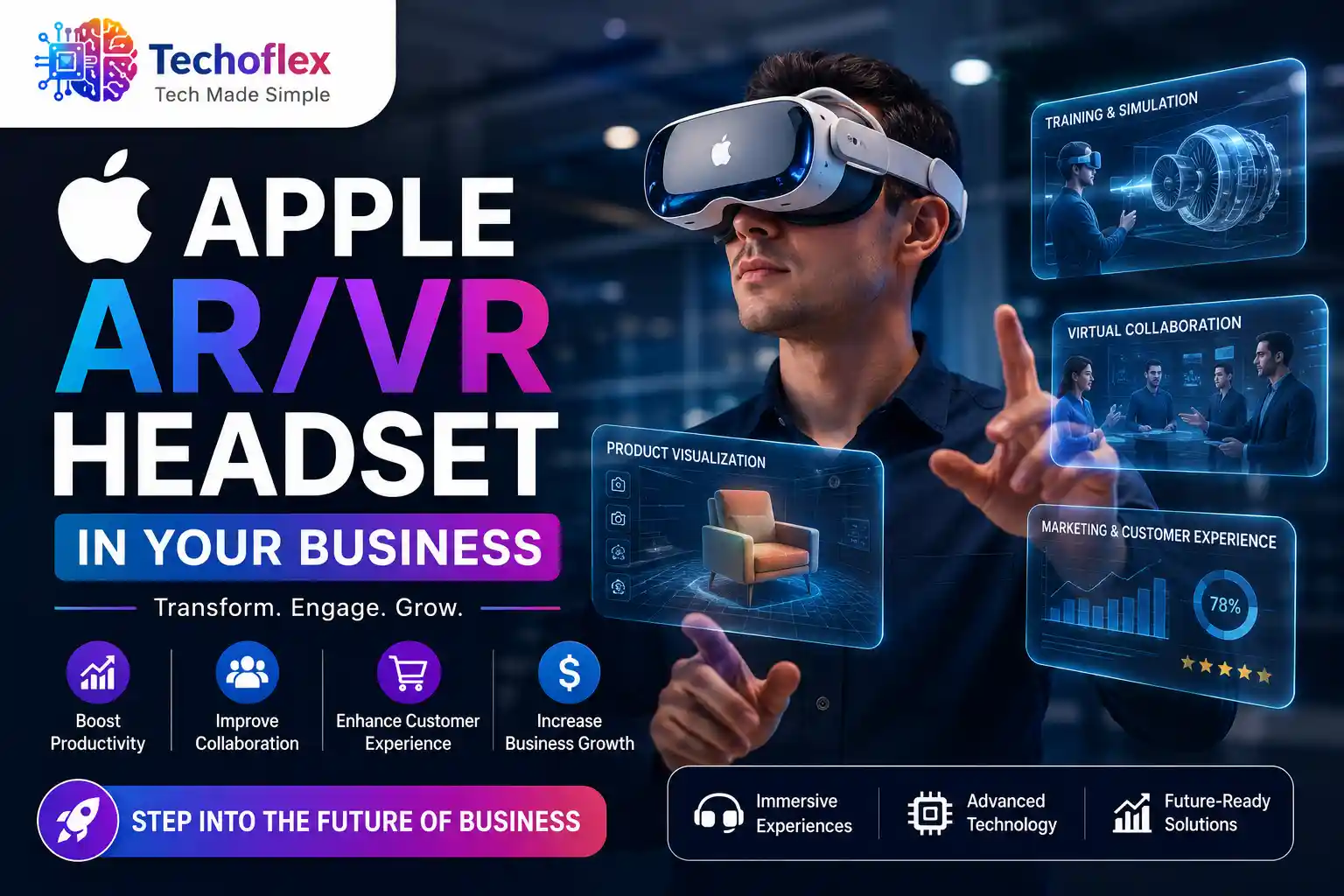
The wait is over. Apple has finally ventured into the realm of virtual reality. The Apple AR/VR headset is likely to reinvigorate the tech industry. A dedicated team of over 1,000 employees has been developing the headset for years.
The headset combines augmented and virtual reality solutions, offering an unparalleled experience. With a sleek design and cutting-edge features, Apple is poised to transform the way we interact with digital content. The upcoming 2023 launch of this device is already creating a buzz among tech enthusiasts and businesses alike. Besides, Apple plans to present a more affordable version soon after, further shaping the future of virtual reality.
Apple AR/VR Headset: Design and Main Features
There has been a lot of talk about the Apple headset. Rumors and leaks suggest the device will have an elegant and modern design. Most likely, VR headset engineers will use lightweight yet durable materials.
Apple is known for its high standards when it comes to design, and the AR/VR headset is no exception. The company prioritizes comfort, wearability, and visual appeal in the headset’s design.
The expected features of Apple’s headset are:
- High-resolution displays: Using two 8K displays or three displays, including a lower resolution AMOLED display, the headset will enhance immersion and interaction with .
- Advanced sensors: The device will feature exterior cameras and sensors for extra functionality, similar to a standard virtual reality headset. Also, it might include LiDAR sensors to improve object placement in AR.
- Hand gesture and eye-tracking: The technology will employ over 12 cameras for hand gesture tracking and eye-tracking. This feature conserves power by rendering full-resolution imagery only in the user’s line of sight, making it the primary control method for the device.
- Wireless connectivity: Apple headset VR will feature Wi-Fi 6E support, the latest Wi-Fi standard, providing strong wireless connectivity, increased bandwidth, and less interference.
- “In-air” typing: Apple’s mixed-reality headset might offer a new method for typing without a physical keyboard or accompanying device. Users will type with the help of gestures and visual gaze in the air.
- Integration with the Apple ecosystem will be a major selling point of the VR headset. It will give consumers access to Apple services and apps.
According to Tim Cook, the potential of virtual reality development is remarkable. He explains:
“If you think about the technology itself with augmented reality, just to take one side of the AR/VR piece, the idea that you could overlay the physical world with things from the digital world could greatly enhance people’s communication, people’s connection.”
Virtual Reality Solutions Are Making a Comeback: Here Is Why
The popularity of virtual reality is on the upswing. More and more consumers are looking to plunge into a new virtual world. Globally, VR usage has already reached .
One reason for this renewed interest in VR is the development of more advanced and affordable technology. Headsets such as the Oculus Quest and the HTC Vive Cosmos have made it easier for us to experience high-quality VR at home without breaking the bank.
Moreover, companies from different fields are applying VR technology. From entertainment and education to retail and healthcare. For instance, for medical professionals allow them to learn in a risk-free environment. As well as hone their skills. These developments suggest that VR will continue to expand and find new uses in the years to come.
The global expenditure on AR/VR technology is going to reach . Hiring a skilled VR development team such as Visartech can help you tap into this lucrative niche and reap the rewards. For example, we have developed a . It features interactive classrooms and integrated browser boards, offering an immersive learning experience.
VR’s Potential to Transform Different Industries for the Better
VR is a powerful lever that propels various industries forward. From virtual reality in manufacturing to education this technology has unlocked endless possibilities and options for growth.
Let’s explore which industries stand to gain the most from the VR revolution with some noteworthy, real-world VR use cases across each sector:
Manufacturing
The use of VR for manufacturing refers to leveraging technology for . By doing so, they achieve higher accuracy of production, reduce errors, and train employees in a safe and cost-effective way, compared to traditional training. For instance, Boeing achieved a increase on projects through VR.
Volkswagen uses VR to revolutionize collaboration in production and logistics. They are the first car manufacturer to adopt the solution across the group with . The solution allowed participants to meet together in a . Their Volkswagen Digital Reality Hub brings together all VR applications, tools, and users in one platform.
Automotive
The global market for VR in the automotive industry is expected to reach , with a compound annual growth rate of 42.6%. Here, VR transforms the design stage, prototyping, and training of mechanics and technicians.
As an illustration, Volvo uses VR to simulate vehicle crash tests, minimizing time and resource demands for physical tests.
There’s also a VR program, Toyota’s TeenDrive365, that gives young drivers a lifelike experience of distracted driving and its consequences. The simulator has an Oculus Rift VR headset and a steering wheel. It challenges teenagers to navigate traffic noises, text messages, and virtual passengers while driving safely
Education
Virtual reality in education helps students boost their compared to classroom training. They can examine and interact with subjects in a more fun way. The teachers may also use VR to simulate different scenarios which are difficult to recreate in a regular classroom setting. Namely, historical events, scientific experiments, and so on. Some notable examples are:
Facebook’s Oculus education program, provided virtual software and hardware to schools, libraries, and museums to create engaging classroom experiences. Also, they foster a complete learning ecosystem in the .
Additionally, our team at Visartech has developed an innovative . The solution includes interactive courses, a dynamic library of instructional content, and virtual classrooms. Altogether, they allow students to interact with their peers and teachers in a virtual space. This VR for education solution is successfully deployed across schools in New York.
Retail & eCommerce
For consumers who want a fully immersive shopping experience, VR/AR is one of the best choices. AR offers of non-AR experiences, making it highly effective for product interaction. Also, VR in e-commerce and retail allows for the creation of virtual reality showrooms and storefronts.
A good example is Rebecca Minkoff’s virtual showroom which delivers novel shopping experiences for customers. It helps the designer track products that customers try on but don’t buy, enabling necessary changes. The solution provides valuable data for decision-making and has resulted in a 65% increase in online orders.
Visartech has also worked on a unique marketing campaign that leverages AR technology for retail, namely this . The goal was to create an interactive brand experience for consumers. With a simple phone camera scan, users can access more information to elevate their shopping experience. This immersive solution resulted in a 29% lift in ad recall and a 15% increase in purchase consideration.
Real Estate
Virtual reality in real estate allows for the creation of virtual property tours so that potential buyers could explore properties remotely. This is a much more resource- and time-efficient solution compared to physical tours. Case in point, one real estate company by using a virtual reality platform to sell properties.
VirtualHotel App is one of the VR examples in real estate. The tool enhances the guest experience while offering additional revenue opportunities for hotel businesses. Collaboratively with hotel management, staff, and guests, the company developed the VR solution to achieve a better understanding of hotels and their workflows. The app integrates seamlessly with current and works as well as a real hotel.
Another case of using VR for real estate is this developed by our team at Visartech. It changes the game of how we view and sell properties by allowing potential buyers to take a virtual interior walkthrough of apartments, regardless of location. The success has been remarkable:
- An 87% boost in audience engagement;
- A 130% increase in purchase decisions;
- By 3.5 time reduction of pre-sales cycle.
6 Ways Businesses Can Use VR/AR Headsets
Companies are embracing VR/AR technologies to improve customer experiences, employee productivity, and data analysis. We studied other noteworthy applications of a :
- Product Customization for the Specific Client Needs
With AR headsets, customers personalize and modify products on the spot, such as custom-designed T-shirts. They can superimpose patterns, colors, and designs onto a physical product.
- Getting the Most Out of Training Financing
Traditional employee training costs around $1,300 per employee annually. Yet, it is often ineffective, with forgotten within a month. VR/AR headsets offer , improving information retention.
- Give Remote Workers Office Atmosphere
Virtual collaboration using headsets facilitates a more productive environment for remote workers. According to , wearing headsets allows users to read facial expressions and body language. It also helps block out distractions and keep track of time. You can achieve all of this while staying connected with colleagues.
- Thoughtful Decisions Through Data Visualization
VR offers . A good example is the developed by Visartech. These technologies enhance interactivity, collaboration, and real-time feedback. They help identify data patterns, test hypotheses and make informed decisions.
- Virtual Storytelling for Emotional Connection with Customers
As much as 80% of the purchasing decisions are driven by emotions. Virtual storytelling allows businesses to build a stronger emotional connection with their customers. Not to mention the maximized revenue. In reality, a want to explore engaging virtual experiences.
- Enhancing IT Infrastructure Security
Virtual reality has the capacity to simulate and test potential cybersecurity threats. Thus, IT professionals identify and address vulnerabilities early on. While not a comprehensive solution, VR plays a vital role in a broader cybersecurity strategy.
Practical Tips on How to Prepare Your Business for Virtual Reality Solutions Deployment
Are you thinking about how to get into VR development? Given the numerous benefits of VR, there’s definitely a niche for your company to fill in.
Still, deploying VR technology can be a tricky endeavor. It requires careful planning and execution to achieve the desired outcomes. For successful integration of VR for business operations, here are some practical tips to follow:
Streamline your current IT infrastructure
Review if your existing systems are able to support VR software development and identify any necessary changes. You might upgrade your existing network to support high bandwidth VR data transfer or your hardware to meet VR system requirements. Also, check its compatibility with existing IT systems. This way, you’ll avoid potential bottlenecks that may negatively impact the VR deployment
Consider revising data management policies
VR data is different from traditional data and therefore requires different management. Review your current policies and implement new ones to ensure proper handling and storage of VR data. They are:
- Data classification;
- Access control;
- Retention;
- Backup and recovery;
- Data privacy regulations;
- Data governance.
These policies ensure the safety, security, and transparent governance of your VR data.
Find processes that will benefit from VR the most
should establish specific criteria and project various levels of their activities to identify the optimal scenario for implementing VR technology. For instance, you might want to develop and deploy a . You need it to enable remote immersive meetings through real-time collaboration using a VR whiteboard.
Develop a justification for your VR solution upgrades
Both qualitative and quantitative justifications explain why the upgrades are necessary for your firm. Here are some examples.
Qualitative justification: “Upgrading the VR solution will improve user experience and reduce maintenance and support costs.”
Quantitative justification: “VR solutions will provide cost savings of 20% annually, reduce meeting times by 30%, and enhance data security, resulting in potential cost savings of $50,000 in damages.”
By following these tips, your VR solution upgrades become a strategic investment for your business. While it may seem daunting, seeking help from expert VR development companies like Visartech is beneficial. With us, you can avoid pitfalls and unnecessary spending. Our team of experts has years of expertise in VR programming.
On a Final Note
Learning how to use VR headsets and why it matters for modern business opens up a whole new world of immersive experiences.
The upcoming release of the Apple AR/VR headset will allow businesses to deal with digital content in a tech-forward fashion. The headset’s advanced features are sure to provide a seamless mixed-reality experience.
Virtual reality solutions are making a comeback, with industries like manufacturing, education, and healthcare starting to realize their potential. They change the way we shop. They make corporate training a fun pastime. And they aid in making better decisions, among other things. But to keep up and reap the fruits of the VR industry growth, businesses require skilled VR development services.