Launching a YouTube channel is one of the most rewarding steps a content creator, brand, or business can take. However, the initial phase of creating a channel and uploading your first few videos often leaves creators wondering what steps to prioritize next to ensure long-term visibility. Simply hitting the upload button is no longer sufficient in a highly competitive digital landscape. To transform viewers into loyal subscribers and customers, you must implement a data-driven organic distribution strategy that treats video content with the same rigorous technical focus as traditional web pages.
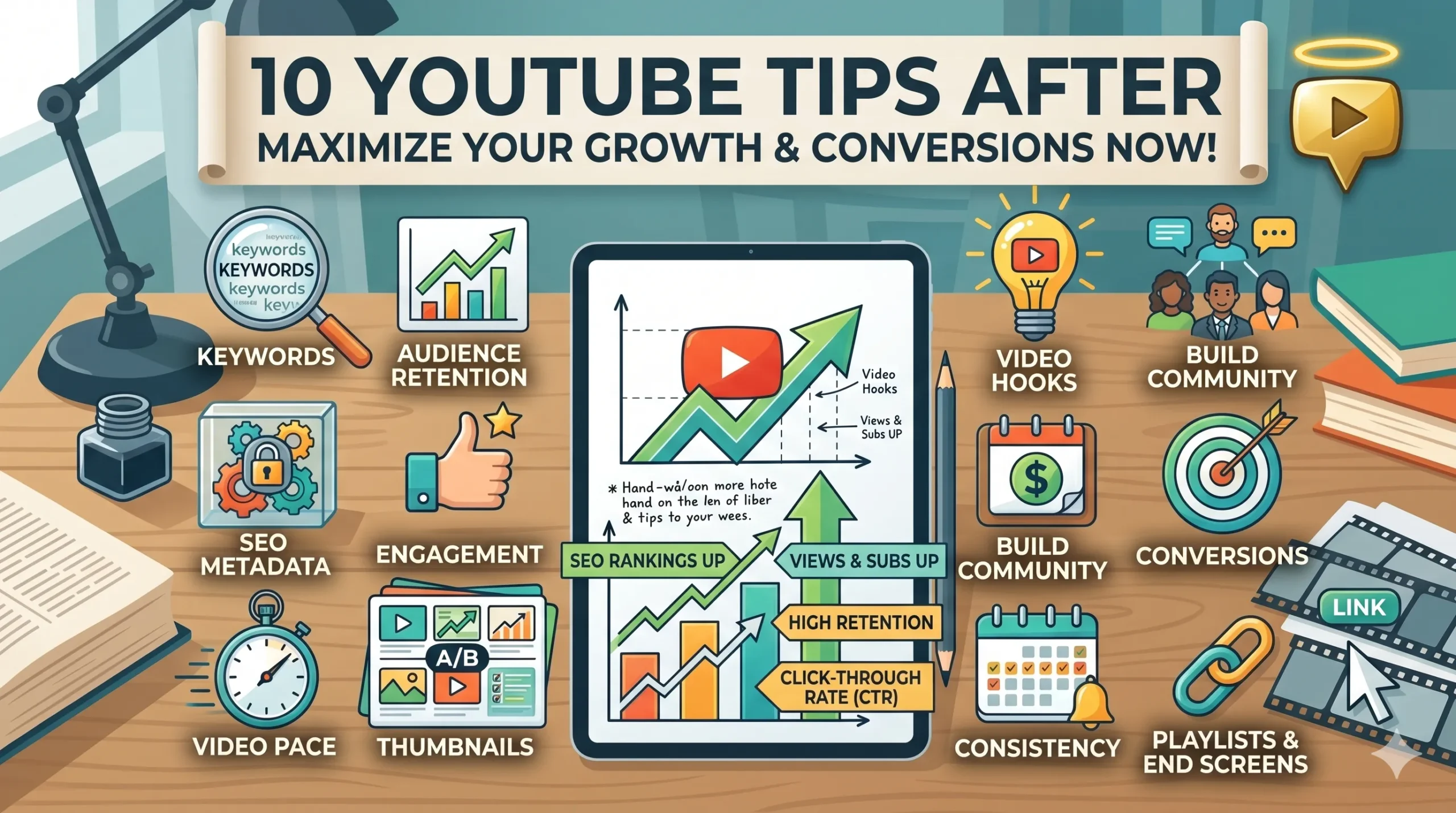
10 YouTube Tips to Skyrocket Your Channel Growth
This comprehensive guide delivers 10 actionable, high-impact algorithmic optimization strategies designed to maximize your visibility, retain viewer attention, and build an audience asset that generates repeatable conversions. Whether you are seeking to build an automated, scalable video engine or refine your existing production framework, mastering these tactical layers will align your content directly with current audience search behaviors and platform delivery mechanics.
1. Master Strategic Keyword Research for Video Optimization
Successful visibility on major search platforms begins long before you activate your camera. Treating video metadata with the same analytical precision as standard on-page search engine optimization ensures that your content aligns cleanly with active viewer queries rather than relying on guesswork. Proper research identifies the precise terminology your target demographic uses, allowing you to intercept them directly at their point of intent.
Identifying High-Volume, Low-Competition Terms
To establish an initial foothold, creators should avoid targeting overly broad phrases. Instead, focus on long-tail variations that present clear user intent and manageable competitive landscapes. Utilizing dedicated analytical suites to isolate phrases with stable query volumes but lower institutional video coverage allows new or growing channels to rank quickly within search results. Mapping out a comprehensive cluster of related search terms provides your channel with an structured outline of sequential topics to cover, signaling deep thematic authority to search crawlers.
Optimizing Video Titles and File Names
Once your primary phrases are isolated, integrate them natively into your file infrastructure and consumer-facing metadata. Before uploading your video file to the platform, rename the raw video file (e.g., changing “final_edit_v2.mp4” to your target keyword phrase). Ensure your public title places the highest-value search terms within the first 60 characters to prevent truncation on mobile displays, while pairing the technical search term with an emotionally resonant benefit or curiosity gap that boosts clicks.
2. Draft High-Conversion Video Descriptions and Structured Metadata
The description box represents a vital piece of digital real estate that search engines parse to understand the contextual relevance of your audio and visual assets. Writing thin, single-sentence descriptions misses a major opportunity to establish deep contextual alignment with the ranking algorithms.
Writing for Crawlers and Human Audiences
An optimized description should treat the first 200 words as a comprehensive summary of your video’s core value proposition. Naturally incorporate your main search terms, secondary variations, and highly related conceptual keywords throughout this introductory block without resorting to keyword stuffing. The remaining area of your description should act as a high-conversion landing page, complete with clear calls-to-action, social media entry points, and references to your core web properties.
Implementing Strategic Timestamps
Structuring your video content with precise interactive timestamps significantly improves the end-user experience while unlocking advanced visibility features across search layouts. When you list sequential time markers in your description, search engines can index individual sections of your video as distinct, scrollable key moments. This allows your video to appear prominently for hyper-specific answers directly within standard search engine results pages, capturing search traffic from audiences who may not even be searching inside the video platform itself.
3. Design High-CTR Custom Thumbnails That Capture Attention
Your click-through rate (CTR) is a foundational metric that signals to recommendation systems whether your content delivers on its visual promise. If your thumbnail fails to win the visual battle on a crowded user feed, the technical quality of your video production becomes irrelevant.
Visual Contrast and Composition Rules
Effective thumbnails rely on strong compositional hierarchies and high-contrast color palettes that pop against both light and dark display modes. Avoid using automatically extracted video frames, which frequently look blurry or uninspiring. Instead, create custom, high-definition graphics featuring a clear focal point—such as an expressive face or a clean close-up of a primary object—positioned on one side of the canvas. Ensure any design elements or text placements are positioned away from the bottom right corner to prevent them from being hidden by the platform’s native duration stamp.
Using Minimalist Text Layouts
If you choose to overlay text onto your thumbnail, limit the word count to a maximum of three to five highly readable words. Never simply repeat your video title verbatim; instead, use the thumbnail text to complement, amplify, or provide a compelling hook that adds to the title’s premise. Treat the title and thumbnail as a coordinated visual team designed to create an irresistible curiosity loop that compels users to click immediately.
4. Optimize for Audience Retention and Watch Time Metrics
Getting a user to click is only half the battle. Recommendation algorithms closely track audience retention curves and total watch time to determine if a video deserves wider algorithmic promotion. Channels that successfully keep users engaged across long sequences are consistently rewarded with exponential traffic velocity.
Perfecting the Video Hook
The first 15 to 30 seconds of your video are critical for preventing immediate viewer drop-off. Eliminate long, generic animated logo intros or extended biographical explanations. Instead, design an immediate, high-energy hook that validates the viewer’s click by stating exactly what they will learn, see, or achieve by watching until the end. Explicitly address the core problem they are trying to solve within the opening moments to establish immediate narrative trust.
Structuring Content with Strategic Pacing
To maintain stable retention rates throughout your entire run time, break your script down into logical, clear sub-topics. Use visual pattern interrupts every 15 to 25 seconds—such as changing camera angles, introducing relevant graphics, displaying text overlays, or cutting to contextual B-roll footage. These shifts reset the viewer’s psychological attention span, lowering cognitive fatigue and keeping them highly engaged throughout the entirety of your presentation.
5. Maximize Session Duration with Smart Playlists and End Screens
Platform retention extending beyond a single video is an incredibly powerful metric. When your content successfully convinces a user to watch multiple videos back-to-back, the platform credits your channel with increasing overall session duration, which dramatically lifts your status across recommendation algorithms.
Building Curated Content Series
Instead of organizing your channel’s public layout into generic, disconnected uploads, assemble your videos into highly targeted, outcome-based playlists. Group your content chronologically or by specific thematic focus so that each video naturally flows into the next sequential step of a broader process. When a user watches a video inside a structured playlist, the next asset queues up automatically, reducing user friction and turning single-video views into multi-video marathons.
Deploying Actionable End Screen Hooks
The final 20 seconds of your video should be treated as a strategic bridge to your next asset, rather than a prompt for viewers to leave. Avoid giving verbal cues that announce your video is ending, such as “That is all for today,” which triggers immediate user abandonment. Instead, seamlessly point to a specific, highly relevant video link on your end screen, verbally explaining exactly why watching that next video is the absolute best next step for solving their broader goal.
6. Cultivate Community Engagement and Conversions
A thriving, highly authoritative channel relies on an active community of engaged participants, rather than a passive list of disengaged subscribers. High volumes of user interactions—likes, shares, and comments—serve as explicit algorithmic signals that your content sparks genuine audience interest.
Driving Comments with Explicit Questions
Do not simply ask viewers for generic feedback like “Let me know what you think below.” Instead, plant specific, low-friction prompts throughout your script. Ask your audience to choose between two distinct options, share their personal experience with a specific problem, or vote on what topic you should cover in your next video. Once comments start rolling in, take the time to reply to every early responder, pinning a thoughtful comment at the top of the thread to spark continuous, compounding conversation.
Strategic Conversion Architecture
To turn your growing audience into tangible business value, build a highly targeted, multi-tier conversion framework across your channel infrastructure. Align your video topics with specific, downloadable lead magnets or valuable resources housed on your core website. Clearly guide your viewers to these links during your presentation, and place your primary call-to-action URLs at the very top of your description box and within pinned comments to maximize clicks and lead generation.
To help you visualize how to distribute your optimization efforts across these various channel components, refer to the operational allocation table below:
| Channel Optimization Element | Primary Algorithmic Target | Strategic Execution Focus
|
|---|---|---|
| Keyword Infrastructure | Search Relevance & Indexing | Integrate long-tail search terms into title, raw file name, and description. |
| Custom Thumbnail Design | Click-Through Rate (CTR) | Utilize high-contrast colors, expressive subjects, and minimal typography. |
| Introductory Hook & Scripting | Audience Retention Rate | Validate the click in the first 20 seconds; eliminate long channel intros. |
| End Screens & Playlists | Total Session Duration | Guide viewers to the next logical asset to build compounding watch loops. |
| Community Management | Engagement Velocity Signals | Respond to early comments and pin interactive discussion prompts. |
Frequently Asked Questions
How long does it typically take for optimization changes to impact video rankings?
Algorithmic adjustments to metadata, descriptions, and structural elements can be processed by indexers within hours of saving changes. However, measurable improvements in organic positions and search discovery footprints typically require two to four weeks of steady performance tracking. The platform’s systems need to collect stable user signals, such as updated click-through rates and retention curves, before permanently elevating your video’s placement across active search queries.
Can I update the titles and thumbnails of older, underperforming videos?
Yes, historical optimization is an incredibly effective way to breathe new life into stagnant assets. If a video features strong evergreen information but suffers from low initial views, refreshing it with a higher-impact, modern thumbnail and a search-optimized title can drastically improve its click-through rate. When recommendation systems detect a sudden spike in viewer click metrics on an older asset, they will often re-test that video across wider audience feeds.
What is the ideal video length for maximizing watch time metrics?
There is no single mandatory length that guarantees algorithmic success; focus instead on matching your video’s duration to the natural depth required by your topic. While longer formats (8 to 15 minutes) provide more opportunities to stack up total watch time minutes, they only work if your retention curve remains high and stable. Prioritize concise pacing and value-dense editing; it is far better to produce a highly engaging, tightly edited six-minute video than a padded, low-energy twelve-minute video that viewers abandon early.
Conclusion
Building a successful, high-converting channel requires a balanced commitment to both creative execution and technical optimization. By treating your channel as a core component of your broader search engine marketing strategy, you create a sustainable discovery asset that continuously attracts highly qualified organic traffic. Focus heavily on identifying low-competition, long-tail terms, crafting descriptive, metadata-rich descriptions, and designing eye-catching custom thumbnails that win the feed click.
As you build strong early visibility, protect those gains by designing engaging video hooks, maintaining fast-paced editing choices, and steering your viewers into structured playlists that drive up your channel’s session duration metrics. These efforts work together to signals deep value to recommendation systems, earning you sustainable, compounding platform visibility over time.